Asset Survey, Testing and Berthing Capacity Assessment

Client:
Location:
Service:
Portland Port Group
Portland
Non-destructive Testing
Client:
Portsmouth International Port
Location:
Portsmouth International Port
Service:
Non-destructive Testing
What the client wanted
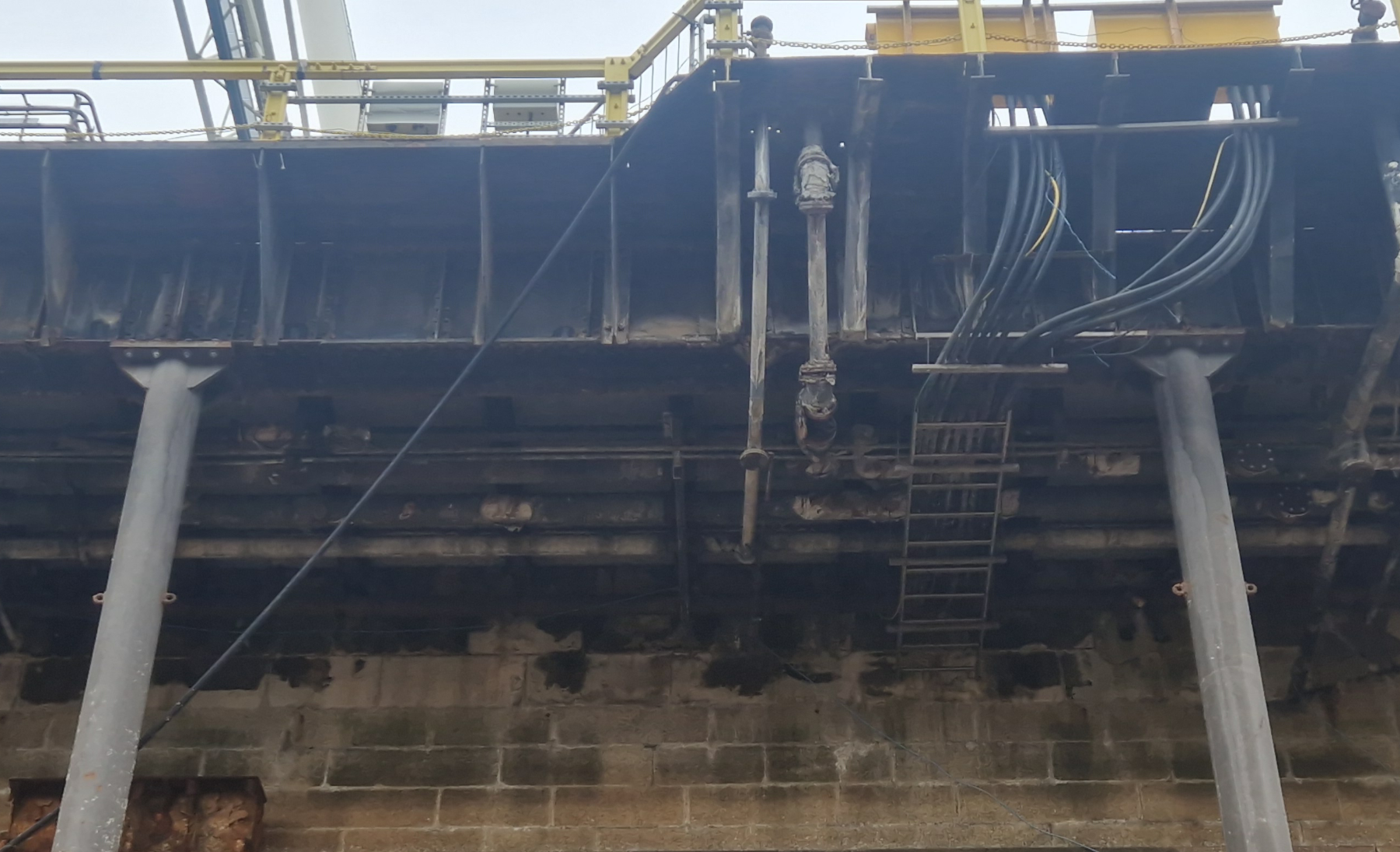
Portsmouth International Port commissioned Attis to undertake a comprehensive survey, inspection and testing programme of the critical maritime assets serving Berth 1. The scope included the berth deck, traffic lanes, fenders, sheet pile quay wall and bollards, together with the production of a berthing capacity assessment.
The Port required a detailed understanding of the actual condition and capacity of its infrastructure, enabling informed asset management decisions whilst ensuring the berth could continue to safely accommodate vessels and operational loading requirements. The assessment also needed to identify any repairs, refurbishment requirements or operational limitations affecting the safe use of the berth.

The Challenge
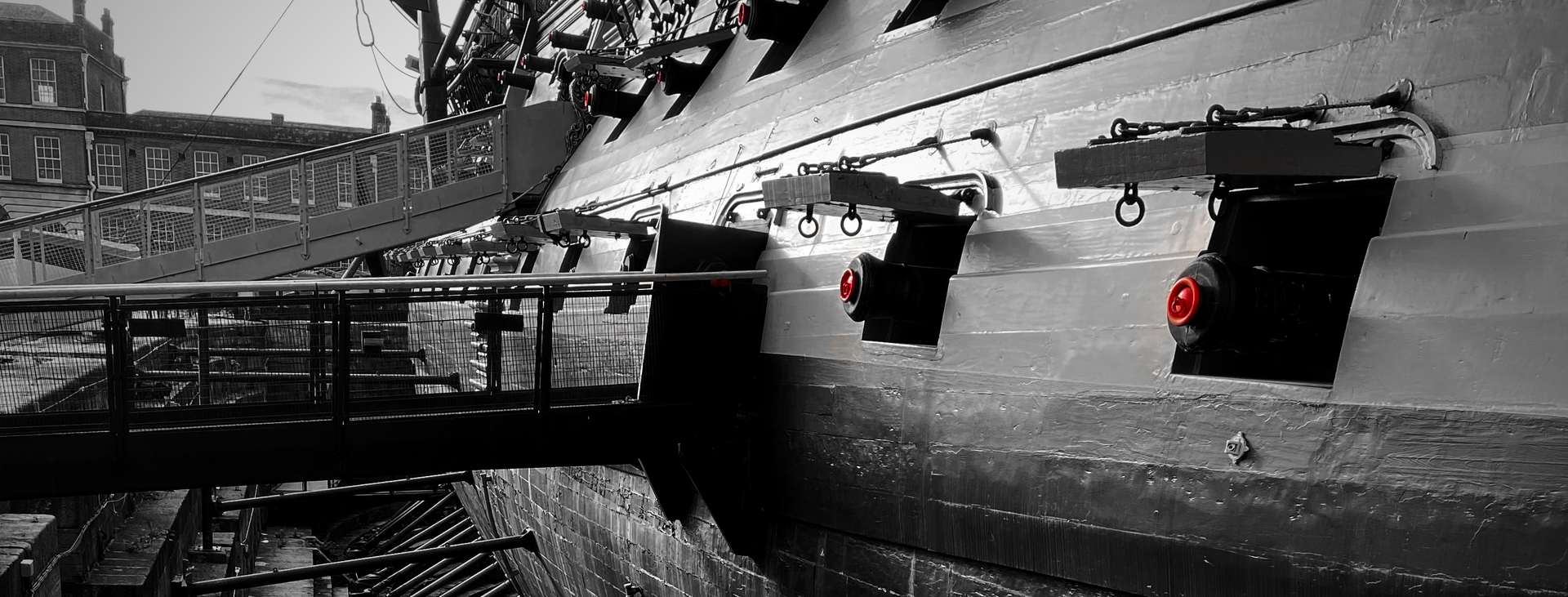
Removing the masts from the world's oldest commissioned warship presented a unique combination of engineering, operational and heritage risks. The project involved lifting irreplaceable historic structures using a 750-tonne crane and specialist lifting equipment, with all works carried out overnight to maintain a controlled and safe working environment.
The client needed independent engineering assurance to validate the lifting strategy, manage project risks and support the safe execution of this highly complex operation.
Our approach
Attis provided engineering and safety expertise throughout the planning and delivery phases of the project. Acting as a trusted advisor and critical friend, we helped finalise the mast lift safety case, provided ongoing assurance, monitored progress and supported the project team throughout the overnight lifting operation.
The Challenge
Berth 1 comprises a variety of ageing maritime infrastructure assets which play a critical role in supporting passenger vessel operations. Traditional inspection methods often provide only visual condition information and are unable to quantify the true in-situ capacity of maritime structures and equipment. Such capacity is not only affected by wear or damage, but also by the quality of the fixities and the substrate into which they are fixed.
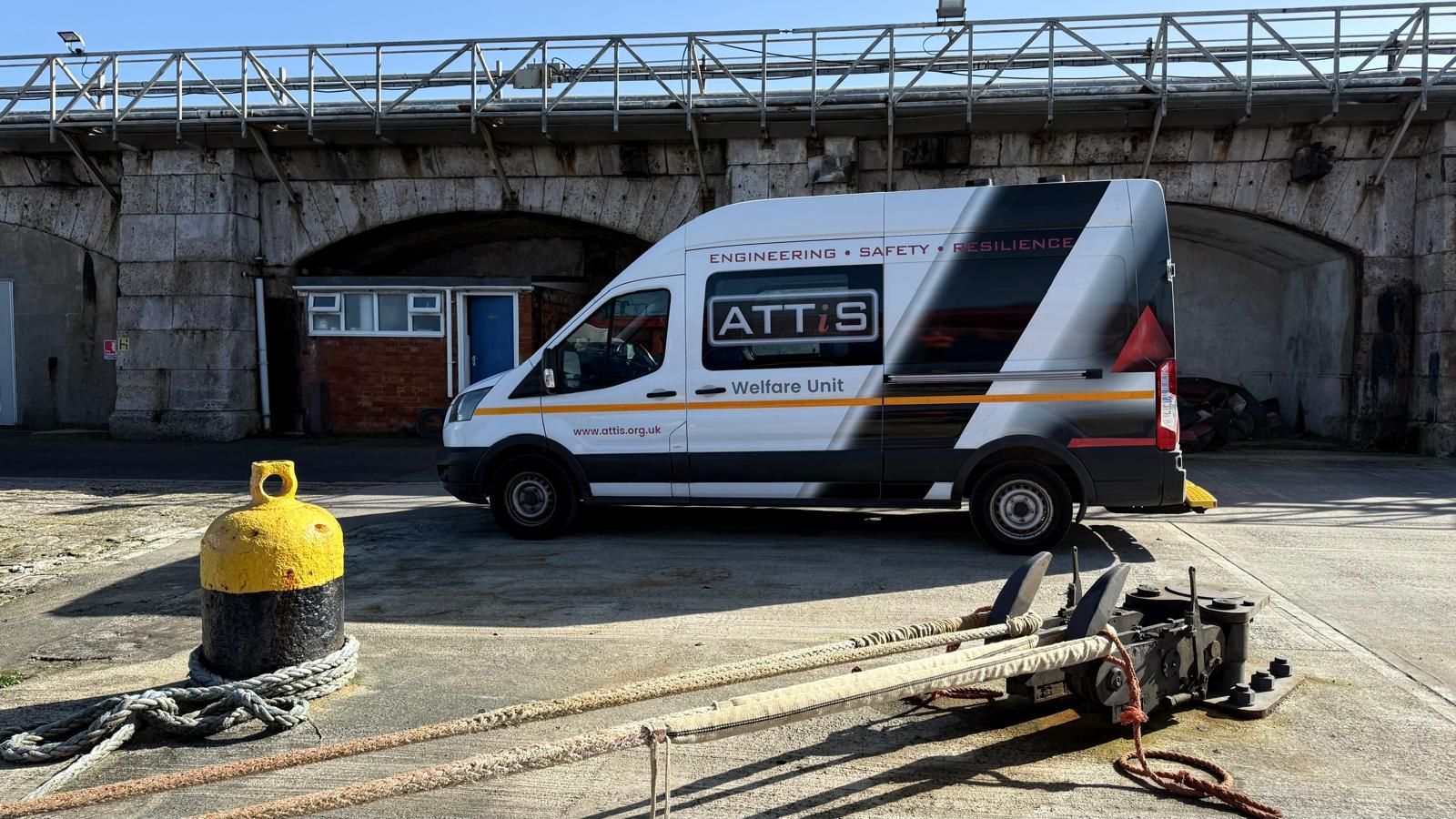
The ability to berth vessels is often – and incorrectly – only thought to include the capacity of the bollards, whereas actual berthing capacity also relies on the strength of the berth, the bollards, and the fenders as a complete system
The project required a holistic assessment of multiple asset types, including:
- Berth deck load capacity.
- Fender condition.
- Sheet pile wall condition and reserve structural capacity.
- Bollard safe working loads.
- Overall berth capacity for vessels under a range of operational and environmental loading conditions.
The challenge was not simply to identify defects, but to provide a robust evidence base that would allow the Port to confidently understand the operational limitations, maintenance priorities and future capability of the berth.
Our Approach
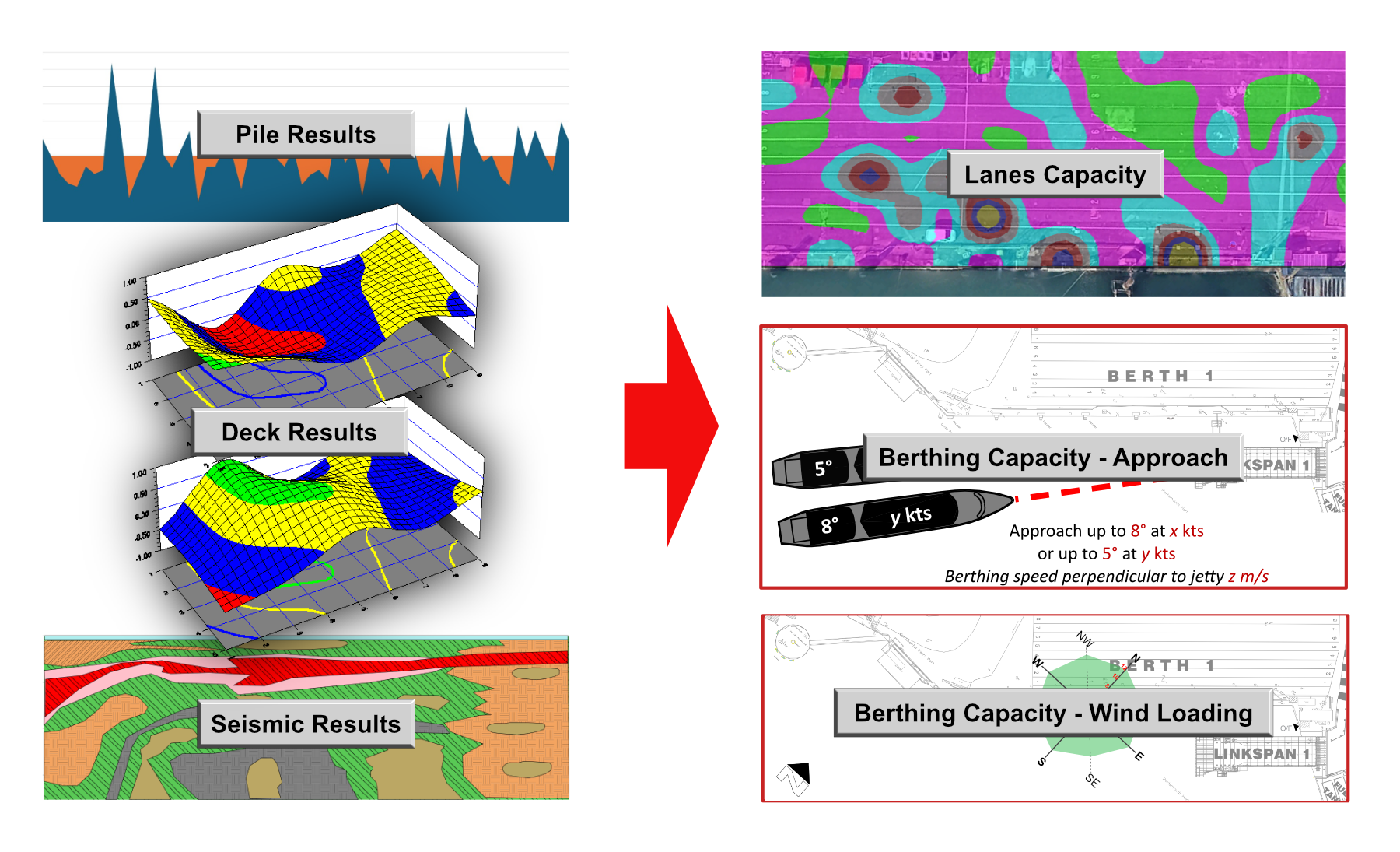
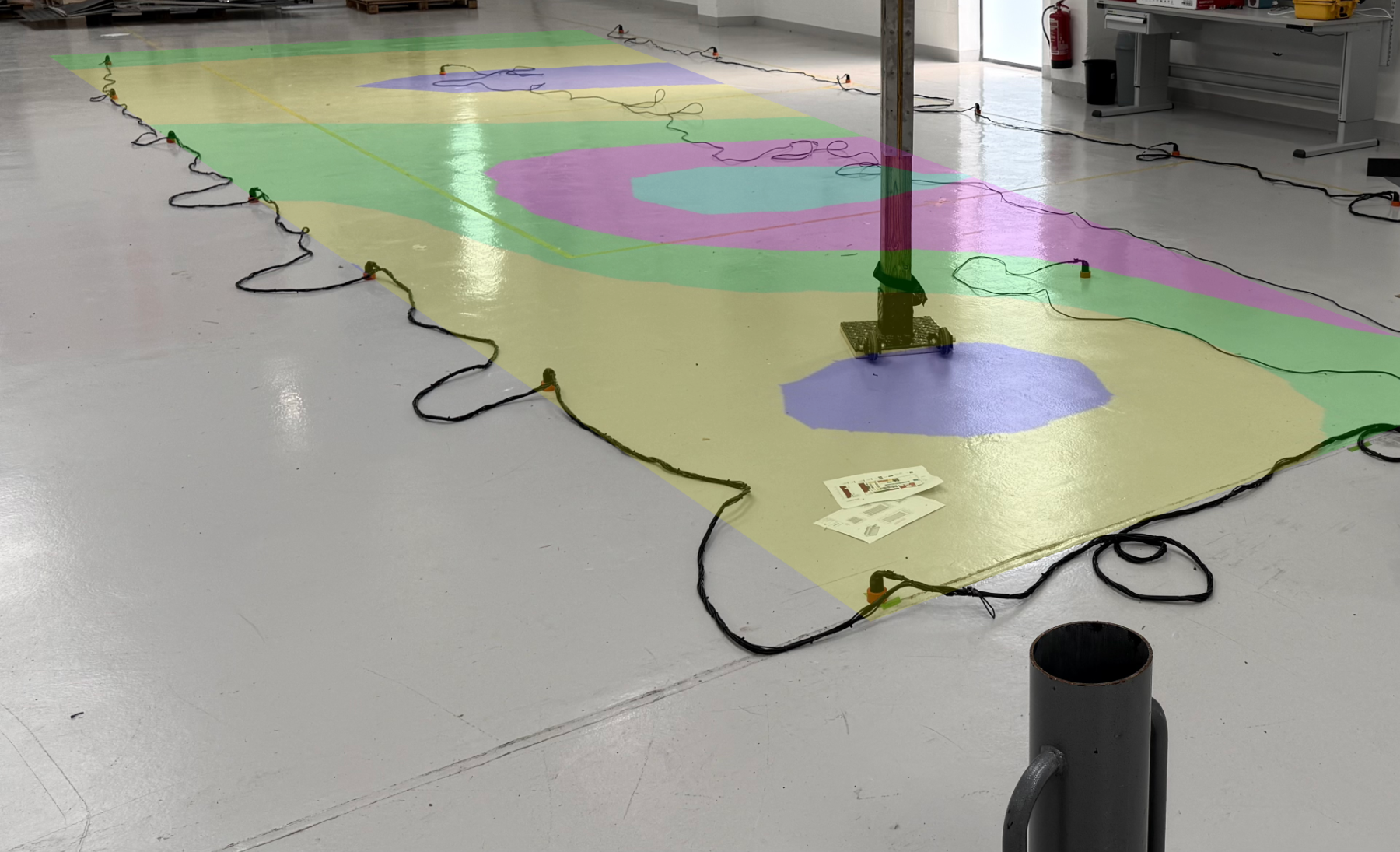
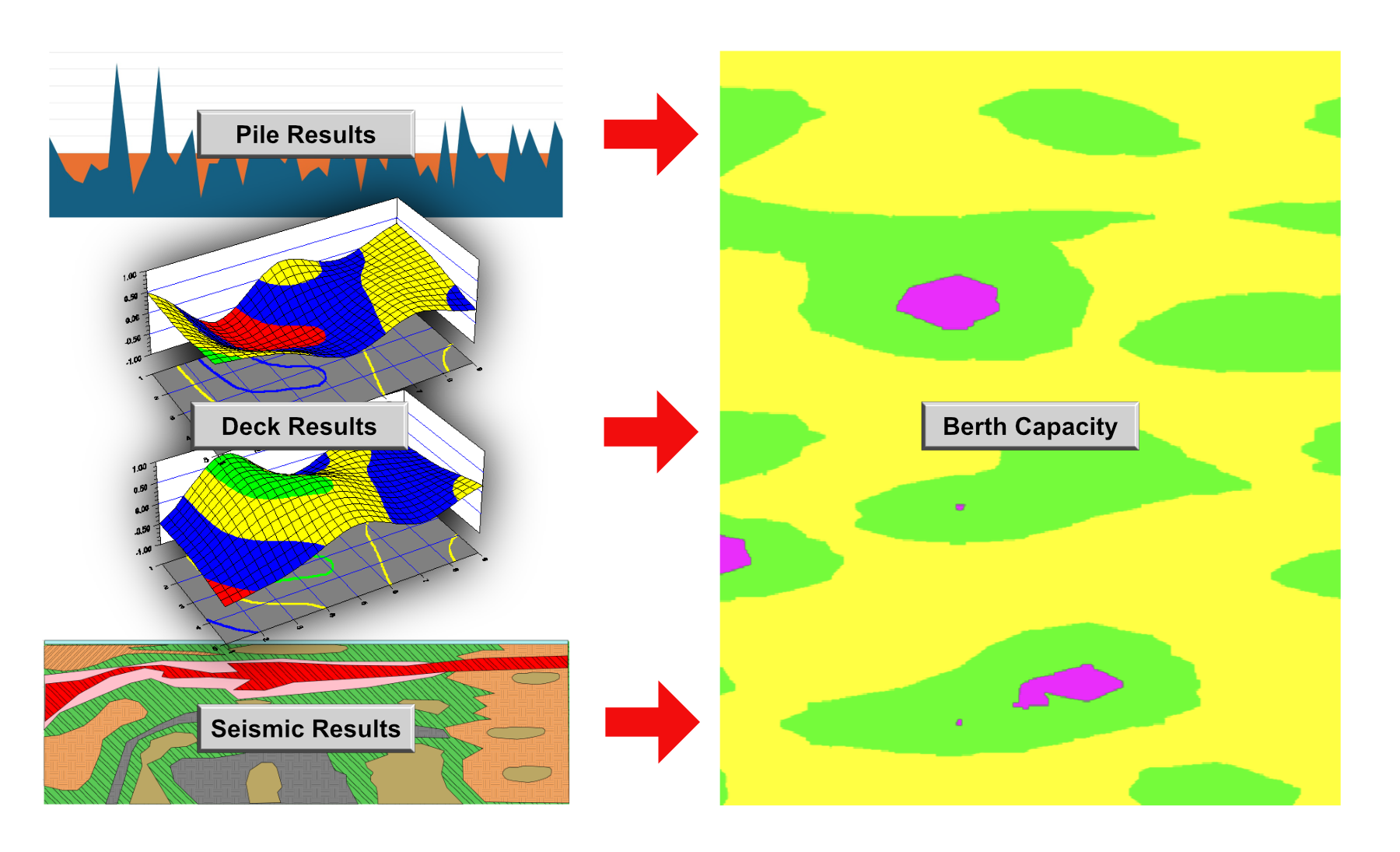
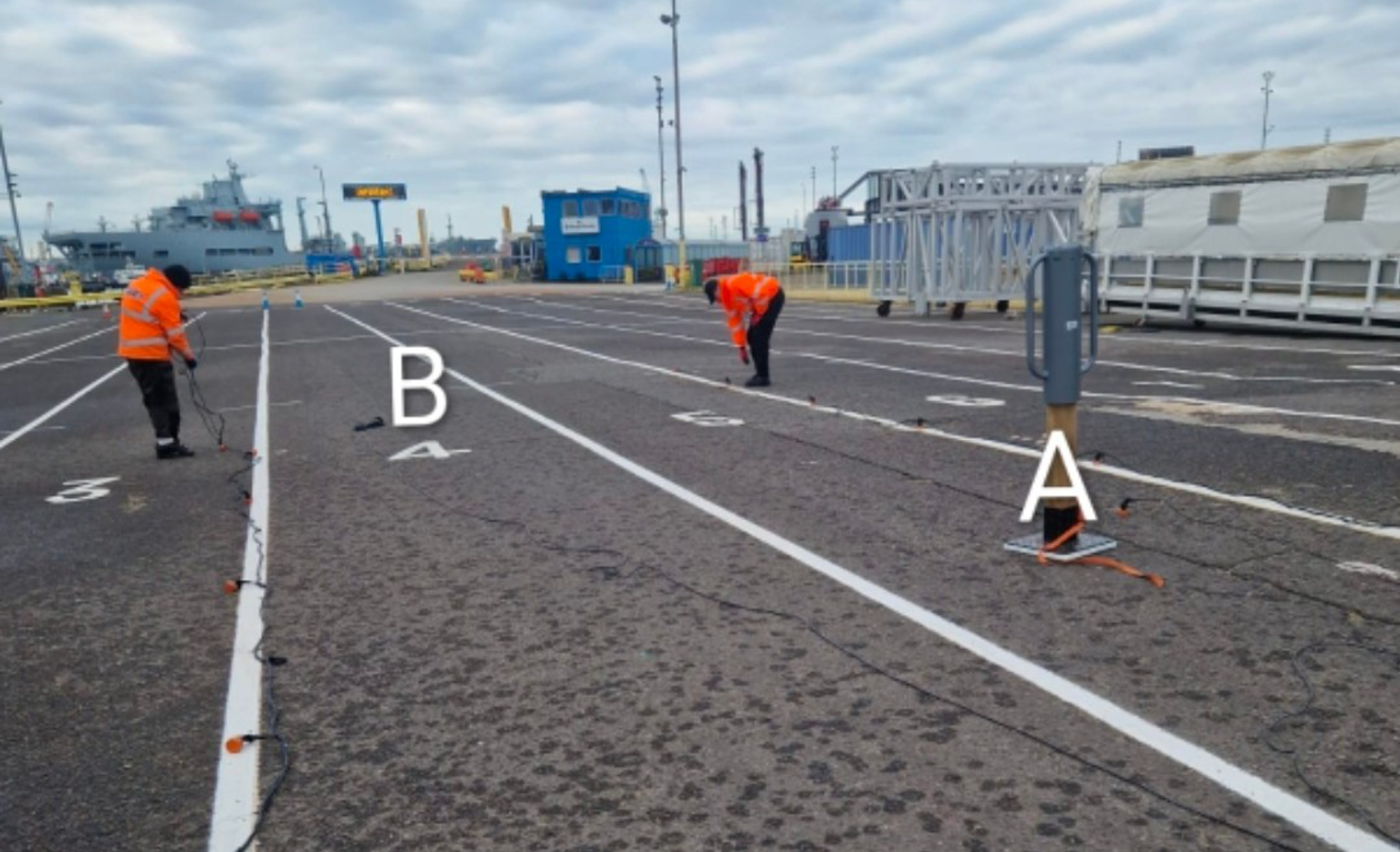
Attis delivered a programme of visual inspections, engineering assessment and non-destructive testing across the entirety of Berth 1. Testing was undertaken using specialist survey and assessment methodologies, including Dynamic Bridge Testing System (DBTS™) and ModShock™ seismic testing techniques to determine the true in-situ capacity of the berth structure without imposing operationally disruptive loads on the assets.
The berth deck was assessed to establish load carrying capacity for operational traffic and crane loading scenarios. Seismic investigations were also completed to determine subsurface conditions and identify any evidence of washout, voiding or deterioration. The testing confirmed consistent ground conditions and provided a detailed understanding of the berth structure and the traffic lanes loading capacity that had been reduced over time by successive engineering decisions.
Fender systems, bollards and sheet pile structures were visually surveyed and tested to establish their current condition, safe working loads and residual capacity. The resulting data were used to determine the berthing capacity, vessel loading assessments and operational limits for vessels of varying sizes, displacement and environmental exposure.
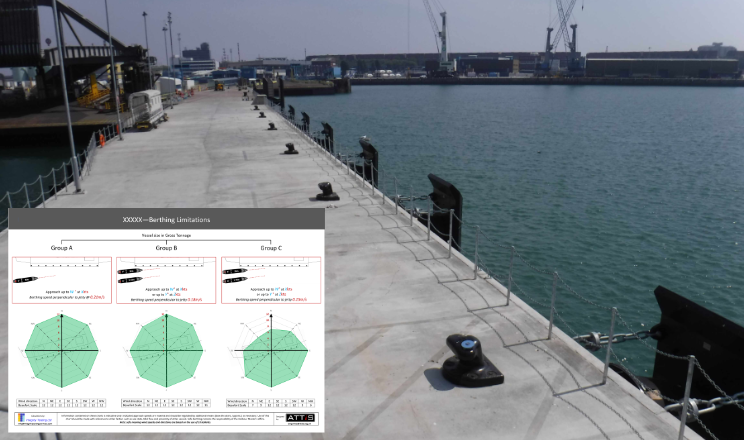
The berthing capacity was also presented pictorially showing the effects of wind from all directions based on the Beaufort wind scale. This provided an operational picture for the berth as a whole and highlighted limitations that would require additional mitigations.

Outcomes
- Confirmed the traffic lanes are capable of supporting greater operational loading.
- Verified that the sheet pile wall remains structurally sound, with significant reserve capacity and no evidence of current structural concerns.
- Established safe working loads for all bollards providing a robust basis for future operational planning.
- Demonstrated that Berth 1 can safely accommodate a range of vessels under normal operational conditions.
- Identified targeted repair and refurbishment requirements, allowing maintenance investment to be focused where it delivers maximum operational benefit.
- Produced a comprehensive berthing capacity assessment incorporating vessel size, displacement, mooring loads, berthing approach velocities and angles for a range of ship sizes.
- Provided Portsmouth International Port with data-driven evidence to support asset management, maintenance planning and future berth operations.
"Attis delivered a comprehensive and evidence-based assessment that has transformed our understanding of Berth 1. Through their testing and analysis, we gained clear visibility of the berth's true structural capacity, operational constraints and future maintenance priorities. The results have provided a robust foundation for asset management planning, supporting both operational resilience and future investment decisions across the port."
Steve Watkyns
Technical Director, Portsmouth International Port